Éric Baudelaire
When Night Falls
Opening: 11 June 2026, 6–9 PM

Éric Baudelaire, When Night Falls, 2026. Exhibition poster. Designed by Pierre-François Letué.
In his inaugural lecture series at the Collège de France, Comment vivre ensemble (How to Live Together, 1976-1977), Roland Barthes observed: “To be strangers to one another is inevitable, even necessary and desirable—except when night falls.”
When Barthes proposed this dual principle of relation, he was imagining a monastic community in which distance and closeness alternate like clockwork. During the day, each inhabitant would dwell in their own solitude; after sunset, they would draw near to one another to brace against the darkness of night. “Living together…is simply a way, perhaps, of confronting together the sadness of evening,” he wrote.
For artist and filmmaker Éric Baudelaire, whose exhibition takes its title from Barthes, an image of shared living appears not in the contrast between day and night, but at their threshold—a transitory moment when the contour of things begins to blur and meanings cannot settle.
At a time when images of atrocities flood our screens, and the overcloseness of the world—its around-the-clock connectivity, its relentless demand for response—has yielded only mass alienation, the metaphor of nightfall points not just to the nightmarish conditions of the present, but to the ambivalent textures of coexistence. It asks a familiar, ever more pressing question: What forms of “we” can still be envisioned, experienced, and desired? Or, simply, how to live together?
*
Quand le soir tombe (When Night Falls, 2026), the five-channel video installation shown in the basement of the exhibition space, follows Death Passed My Way and Stuck This Flower in My Mouth (2026), a video work by Baudelaire currently showing as part of the 2026 Venice Biennial, In Minor Keys, curated by Koyo Kouoh. In this previous work set in a flower market in the Netherlands, Baudelaire’s camera tracks the automatized operations and streamlined gestures that prop up the contemporary logistical economy. Instead of denouncing the systems as cold and monstrous, the images find their way to something irreducibly human in the quiet portrayal of people at work.
Extending this mode of observation, Quand le soir tombe (2026) moves through six locations across France—not only as a documentary survey of systems that regulate and sustain collective life, but as a testament, neither bleak nor affirmative, to the intricacies of sociality. Two longtime collaborators of Baudelaire shape the visual language: all footage was shot on a single, mostly shoulder-held camera by cinematographer Claire Mathon, contrary to what multichannel work might suggest. Film editor Claire Atherton then cut and spatialized the material across five screens arranged in a semicircle, folding different temporalities and perspectives into an absorbing, inhabitable sense of place.
The installation presents each site as a distinct world of bodies, movements, and protocols, which calls for a constant recalibration of our attention. Close-ups of hands and faces are shown alongside wide shots of architecture. Time skips, loops, and stutters. Occasionally, a scene is doubled, a screen goes dark; the multiple flows of images syncopate. Through this errant dispersal of the gaze, the film attends to the contingent forms by which we organize our lives into something grandiose, absurd, frivolous, or tender—provisionally called “together.”
As Baudelaire put it, “Rather than making a film about the spiral of disaster that is slowly consuming us, I want to film some of our attempts at living together, in all their cruelty and splendour, in these troubled times.”
*
In a prelude chapter linking the project to the Venice installation, white-gloved workers pick and prune roses along endless rows of hydroponic bushes inside Europe’s largest flower farm in Soria, Spain. Cut and hung by their stems on conveyor belts, the flowers are boxed and loaded onto trucks at the dock, ready to be shipped across the continent. For Baudelaire, the flowers allegorize an economy of visceral waste, logically organized around a desire for beauty at the lowest possible cost—a slow environmental death.
In a school in La Défense—the financial district on the outskirts of Paris—people learn to trade stocks using virtual currency on computer simulators set fifteen minutes behind real market time. The founder of the school believes that the stock exchange can be a “social equalizer” for young people with no formal training or diploma. Most of the students are from working-class and immigrant backgrounds, hand-picked by the founder. To access a different future, they have to learn the art of speculation.
At the French National Metrology and Testing Laboratory—home to the original kilogram and the standard meter—government scientists measure weights with extreme precision to verify their accuracy. Technicians submit condoms, stuffed animals, toy cars, and Covid-19 masks to batteries of tests to ensure they meet national safety standards.
Representatives of 193 member states convene at a UNESCO General Assembly to discuss social cohesion in a divided world through cultural, scientific and educational initiatives. In a wood-paneled auditorium at the organization’s modernist headquarters, a choreography of world diplomacy is set to live chamber music. Scripted speeches are translated and murmured into hundreds of earpieces. In hallways and back rooms, stacks of paper are shuffled around; janitors pick up the trash.
In a storage facility hidden away in Ivry-sur-Seine, a Parisian suburb, statues and paintings from municipal museums and city churches are kept out of sight, haphazardly stacked or wrapped in plastic sheets. Too costly to restore, too valuable to discard, not deemed worthy of display—these dormant figures stand in limbo, posing accidental, haunting tableaux. Restorers visit occasionally; their efforts to repair seem futile, even touching, in the face of decay and neglect.
In a small town in Normandy, citizens cast their votes for the presidential elections in the town hall beneath a large historical painting from 1886. Titled Les bouches inutiles (Useless Mouths), Francis Tattegrain’s naturalist canvas depicts the town under siege during a harsh winter, when inhabitants resorted to cannibalism to survive. The voting procedures are hypnotic and orderly. Each ballot is cast and counted in public view with the same unhurried routine, the names of the two candidates—one from the right, the other from the far-right—read out again and again. On another screen, the camera slowly drifts over painted scenes of horror.
Founded in 1784, the National Institute for Blind Youth in Paris was one of the first boarding schools for the visually impaired. Louis Braille, inventor of the Braille writing system, was once a student and later a teacher at the Institute. In its classical building, pupils of all ages engage in various activities—playing sport, learning to read and write in Braille, tuning the piano, drawing, and cooking. By spending time with the children and following their everyday, Baudelaire captures how they learn to navigate a world that remains largely unadapted to their needs. Here, living-together takes on new meanings. It asks us to witness, to imagine: When survival requires different proximity and relation to the world and to each other than those society demands, what forms of community emerge in the process?
*
Since completing the last chapter of Quand le soir tombe, Baudelaire has returned to the National Institute for Blind Youth to work on two collaborative projects with the students there: Car la lune (For the Moon), a feature film that will be released later this year, and Clair de lune (Moonlight), a series of sculptures conceived site-specifically for the ground floor of CCA Berlin, marking for the artist a step into an unfamiliar medium. Twice a month for the past year, he met the students at the school to create forms together, guided by a simple rule—to make something they consider beautiful. Each work begins as a 15 × 15 cm sculpture made by a pupil from plasticine, toy pieces, jewelry, and other found objects. These were then 3D-scanned, enlarged, carved in cherry wood, and hand-finished at the workshop of Lafayette Anticipations. The sculptures each bear a plaque with their titles in Braille. They are made to be touched.
In this collaborative, open-ended process, a new relationship takes hold, different from the one between filmmaker, filmed subjects, and audience. Watching the children’s lives unfold on the high-resolution screens, one becomes conscious of how documentary film sees—its logic of capture and comprehension, its always incomplete access to reality. The sculptures, meanwhile, bear another kind of presence, redirecting our attention to the textures of what we hold in common and what holds us in the common. These imaginary terrains, as expressions of beauty and survival, invite us to experience form through touch, and to reconsider the receptivity of being in this world. Through them, perhaps, we could feel our way toward a blurred, irreducible sociality of the senses, as darkness settles in.
—Nan Xi
The exhibition is supported by Stiftung Kunstfonds; and Trampoline, Association in support of the French art scene, Paris.
With the support of Lafayette Anticipations - Fondation d’entreprise Galeries Lafayette.
The production of the video installation is supported by Mondes Nouveaux and Medienboard Berlin-Brandenburg.
Quand le soir tombe (2026)
Director of photography: Claire Mathon
Sound recording and mix: Éric Lesachet
Editing & spatialization: Claire Atherton
Title sequence & posters: Pierre-François Letué
Clair de lune (2026), the series of sculptures, was made in collaboration with Crystal Lau Chang, Kadiatou Diakhité, Mèï Jendoubi, Jade Ebara Ossebi, Iris Fontanella, and Astrid Plouchart.
Production and woodwork: Olivier Magnier and Raphaël Raynaud
The exhibition is accompanied by a four-part public program with contributions by Erika Balsom, Éric Baudelaire, Aria Dean, Jan Kunkel, Isabel Millar, curated by Jakob Grüner and Nan Xi.
The exhibition is curated by Fabian Schöneich with Nan Xi; production and technical support by Franz Hempel, Dominik Hildebrand, Mahmoud Ismail, and Kirstine Kjeldsen.

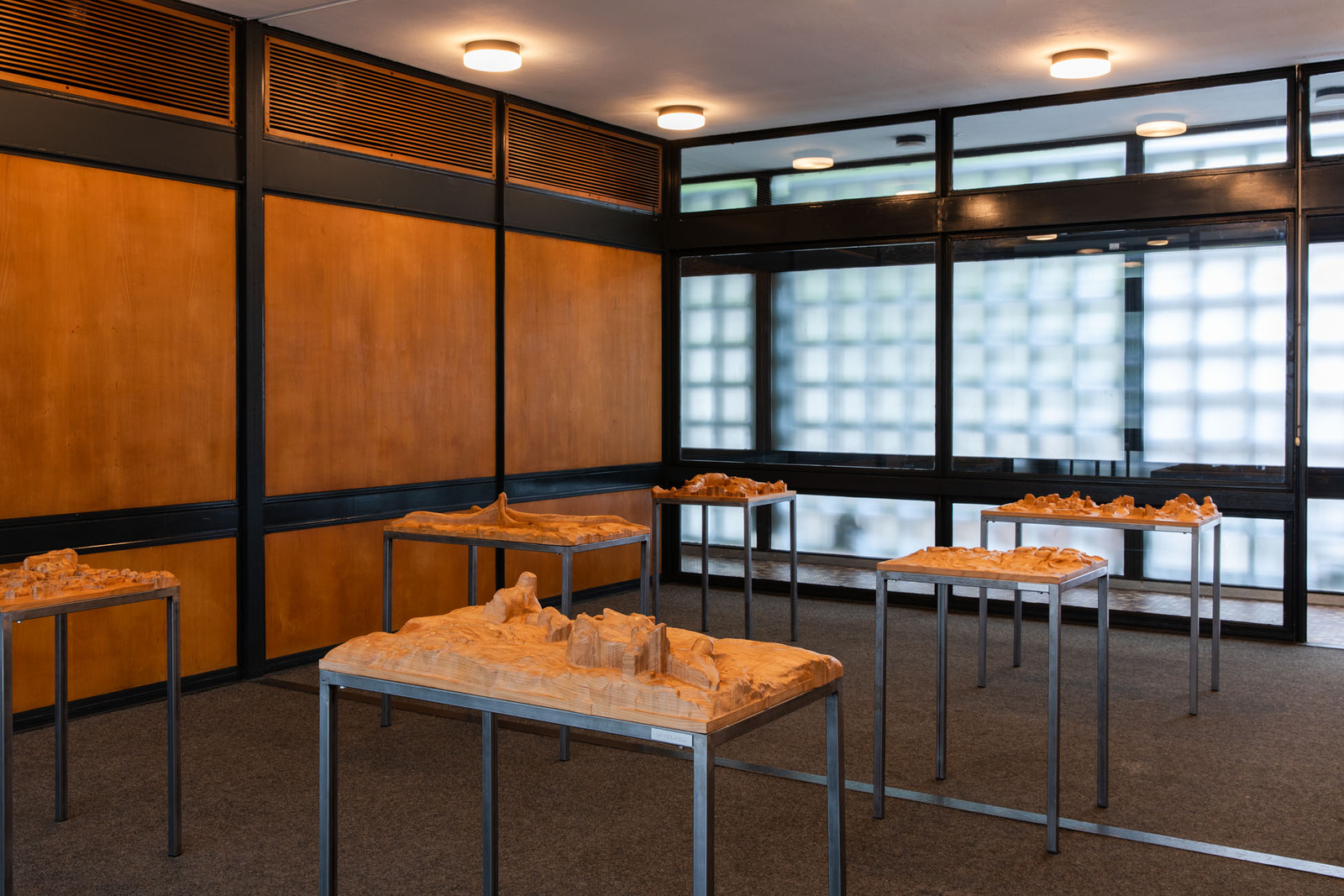
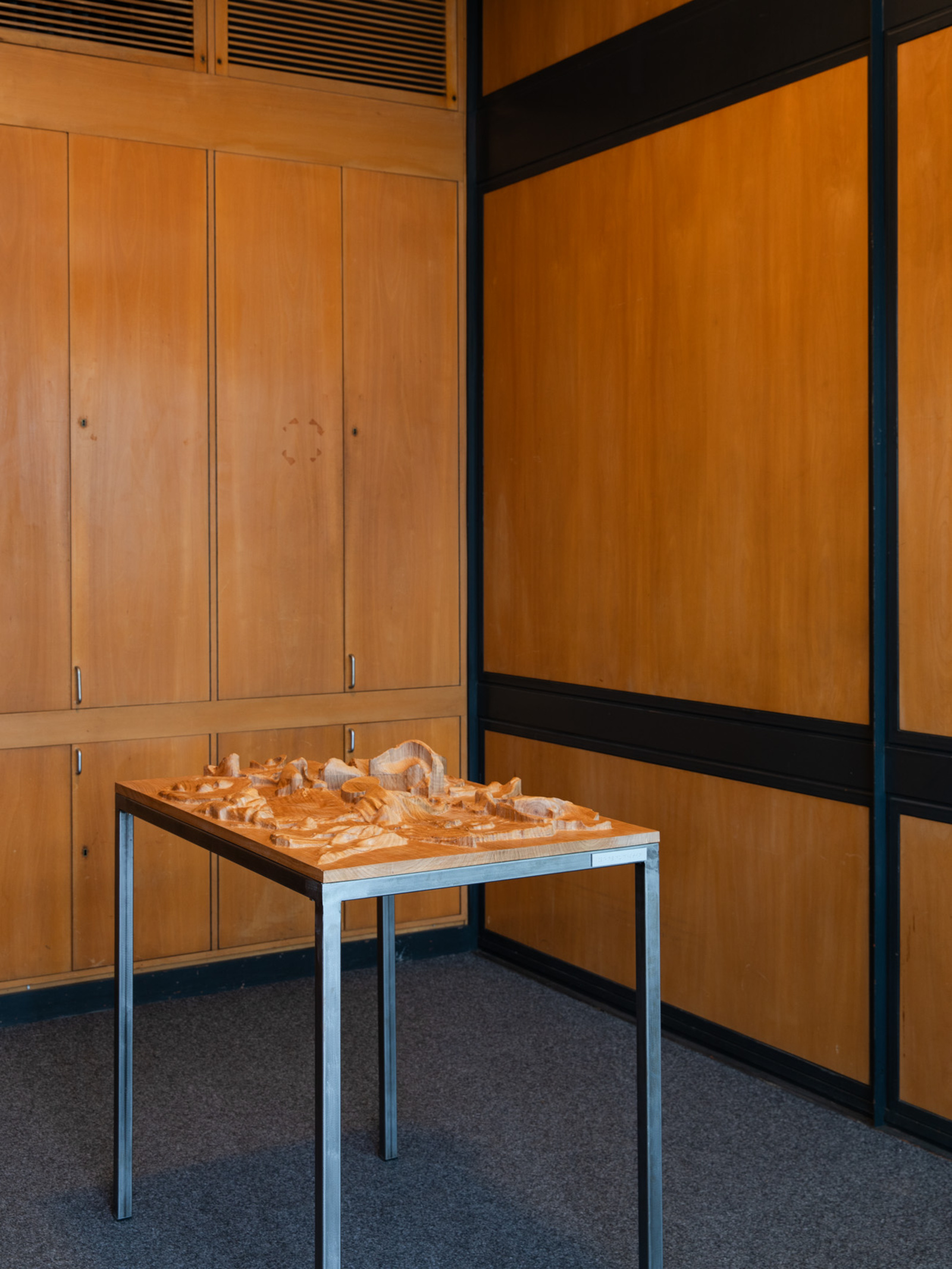
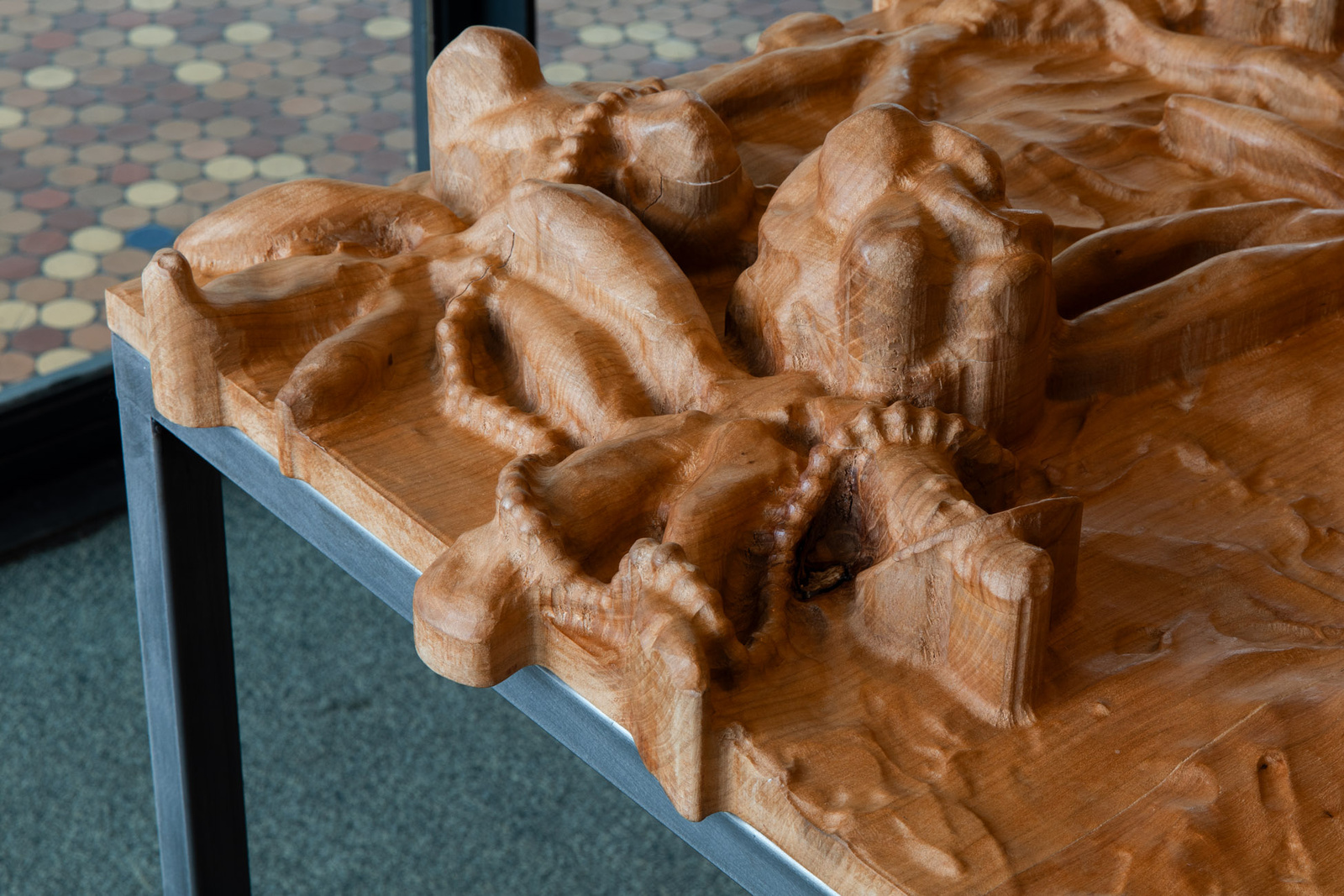
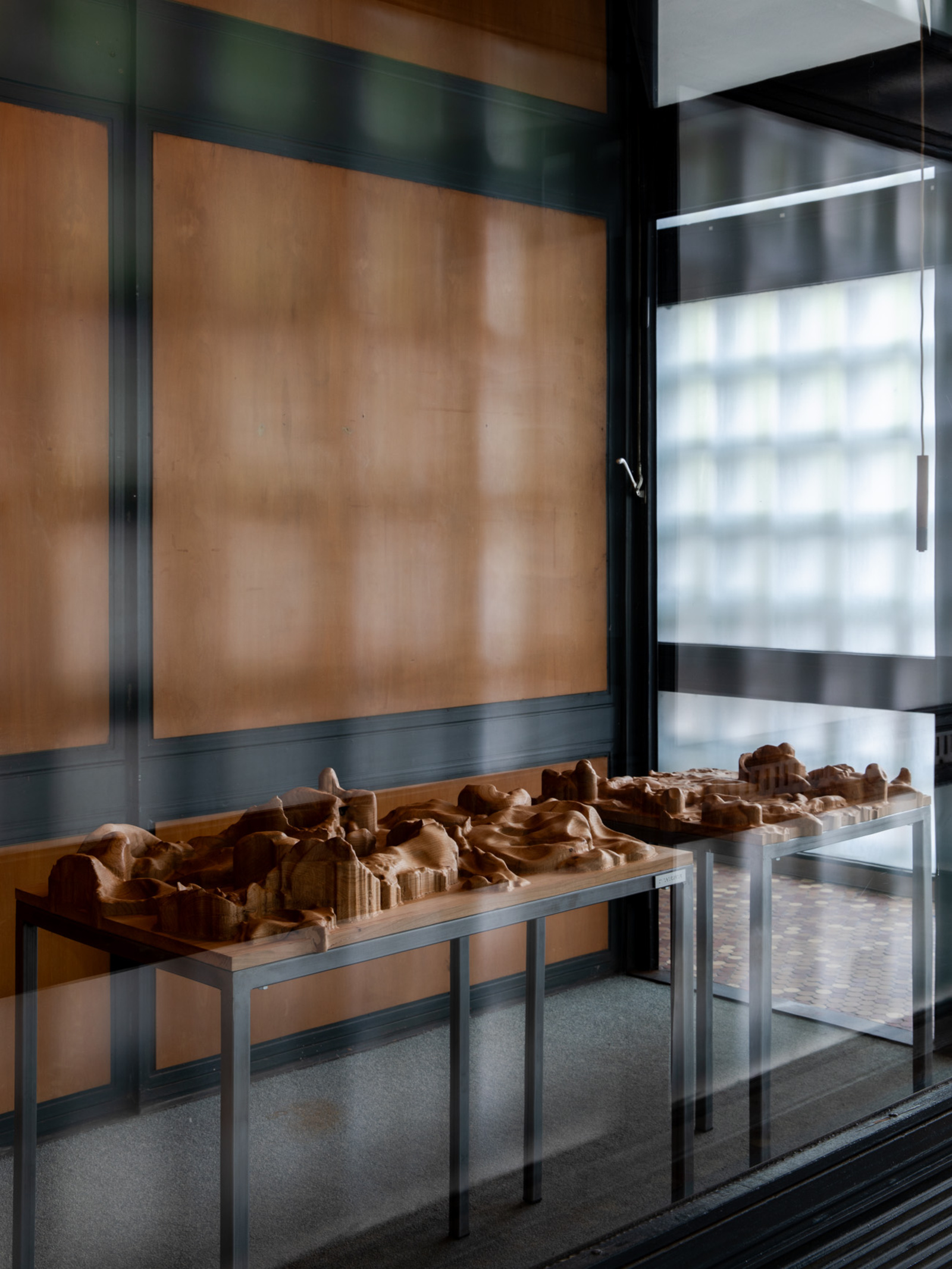
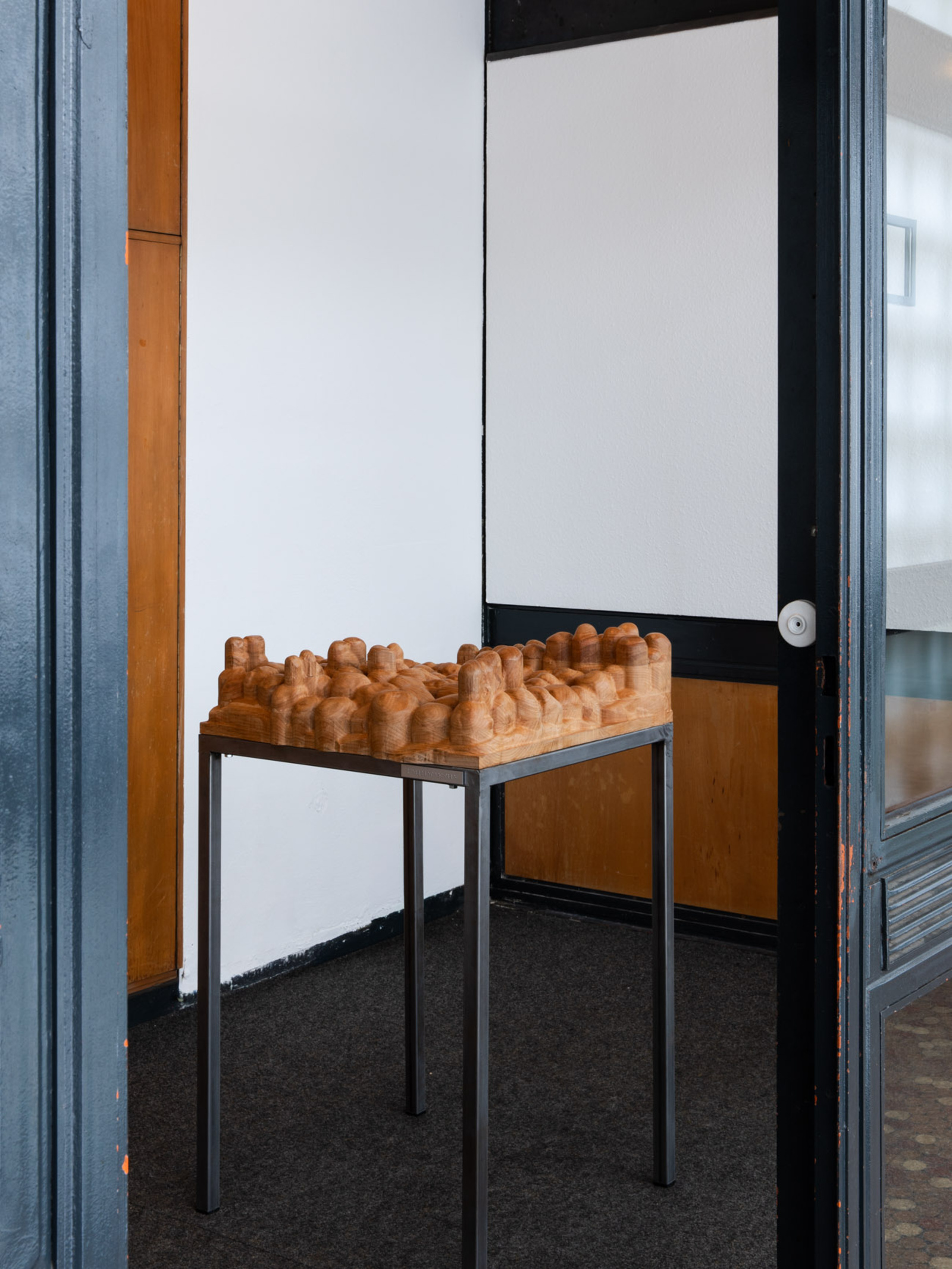
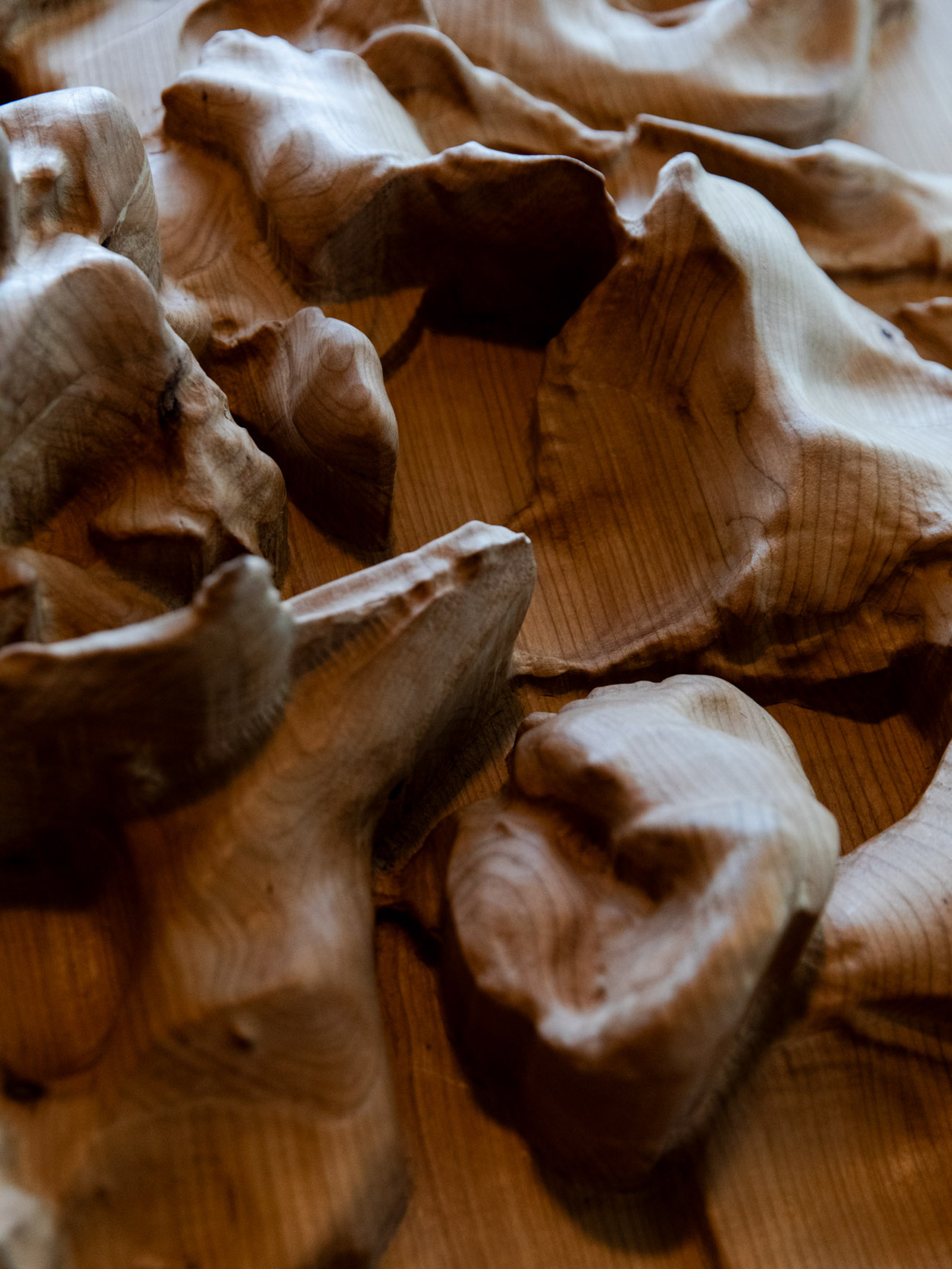
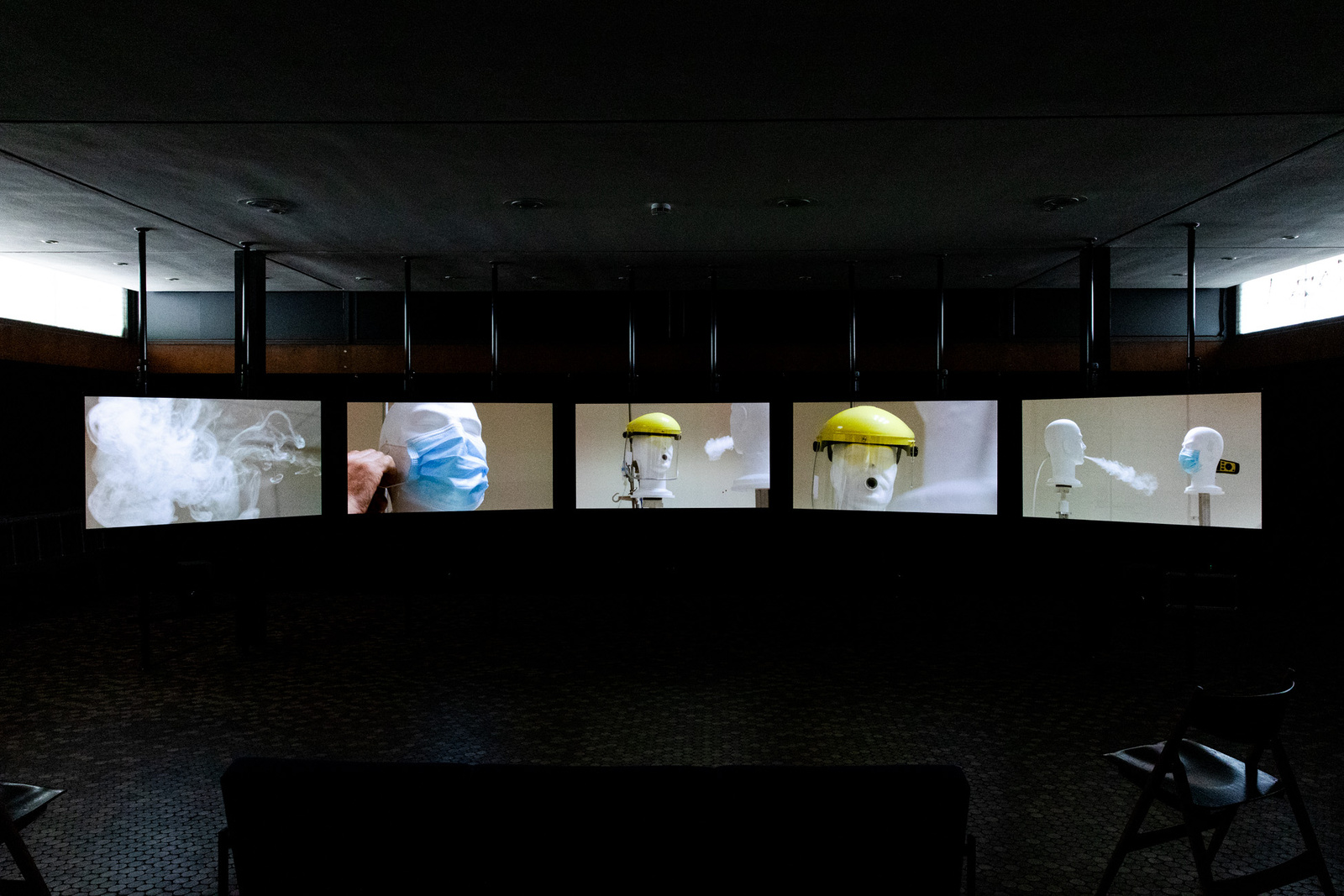
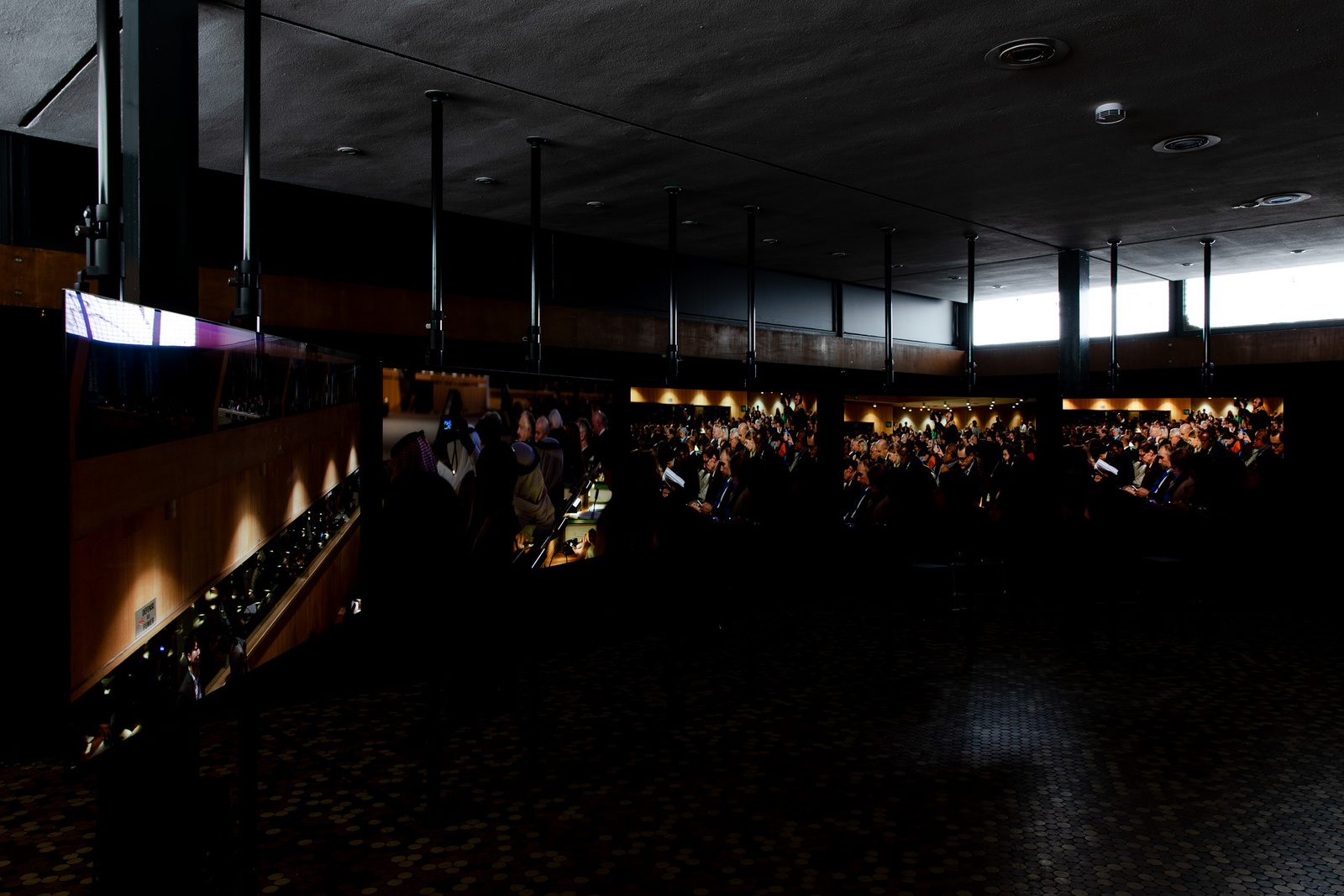
Éric Baudelaire, When Night Falls, Exhibitions views, CCA Berlin, 2026. Photos: Diana Pfammatter/CCA Berlin
Éric Baudelaire is an artist and filmmaker based in Paris, France. Trained as a political scientist, he developed a research-based artistic practice that spans photography, moving image, installation, and performance. His feature films have been presented at major film festivals such as the Berlinale, Locarno, and the New York Film Festival, and within exhibitions where they appear as part of larger installations combining other works, archival materials, and extensive public programmes. In recent years, his work has been exhibited at the Centre Pompidou, MMK Frankfurt, Kunsthalle St. Gallen, Museo Reina Sofía, Bergen Kunsthall, Kunstinstituut Melly, Fridericianum, Beirut Art Center, and Gasworks, as well as in the São Paulo Biennial, Whitney Biennial, Sharjah Biennial, Taipei Biennial, and currently in the Venice Biennale.
With thanks to Rebecca Lamarche-Vadel, Bernard Blistène, Maud Desseignes, Guillaume Houzé, Clément Delépine, Coralie Goyard, Salomé Moindjie-Gallet, Caroline Rambaud, Zsuzsanna Kiràly, Stéphane Gaillard, L’Institut National des Jeunes Aveugles.