Britta Thie
In Development
Book Launch and Conversation: Britta Thie & Simon Denny on Bodies, Images and Technology.
Location: Chapel, Kaiser-Wilhelm-Memorial-Church, Google Maps
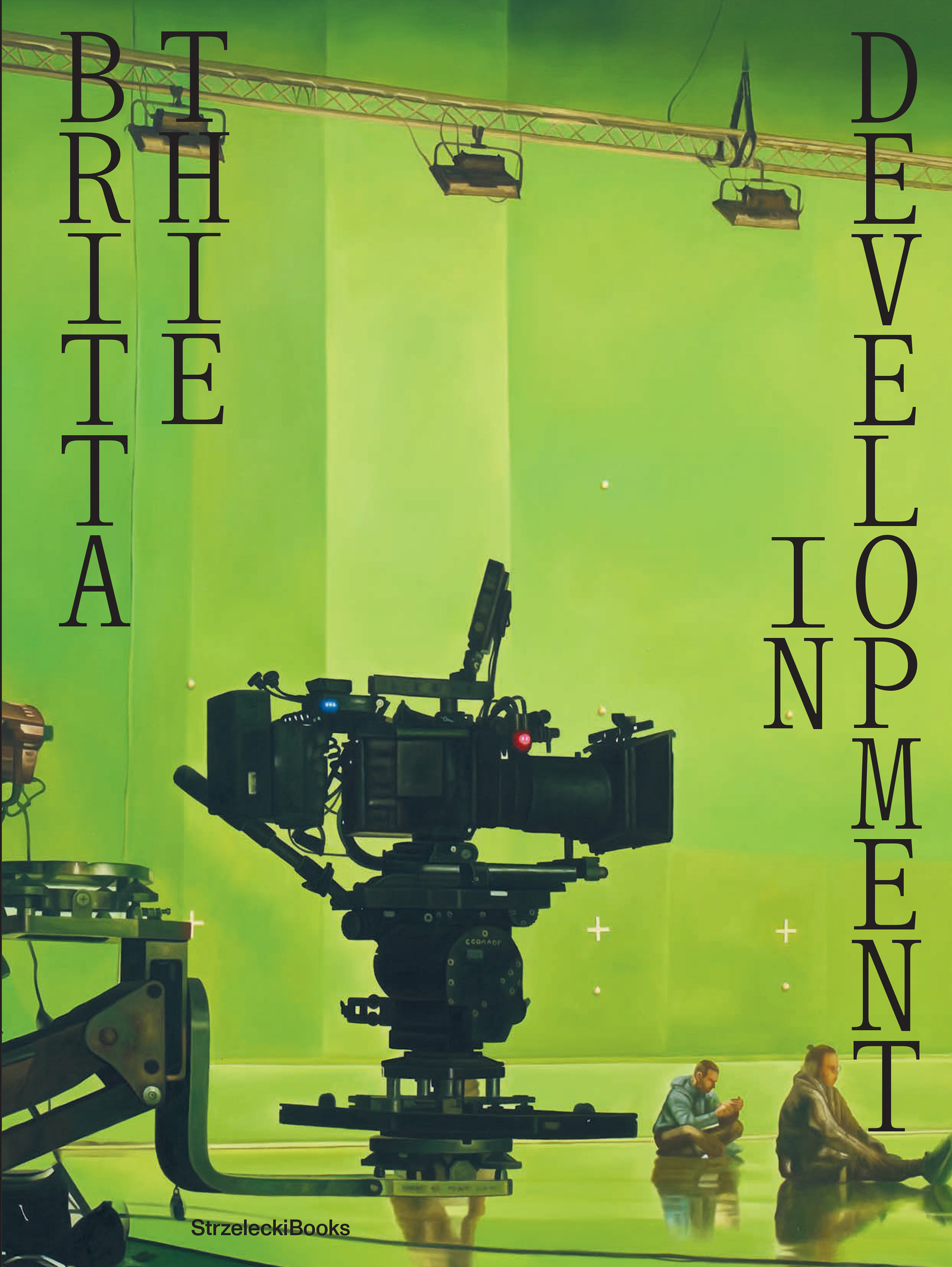
Britta Thie, In Development, Book cover, 2026.
Britta Thie paints machines; Simon Denny paints with machines. Approaching technology from different directions, both artists explore how technological systems produce images, narratives and realities, and what happens to painting as machines increasingly participate in making and seeing images themselves.
On the occasion of Thie's new book In Development, the two artists come together to discuss bodies, images and technology at a moment of profound technological change.
"Digital puberty" is Thie's term for a generational coincidence: coming of age at the same moment the world shifted from analogue to digital. For the last generation to remember an analogue childhood, the transformations of adolescence ran strangely parallel to those of technology. As bodies changed, so did access to images, music, information, intimacy and identity.
The internet opened the world, particularly for teenagers growing up outside major cultural centres. Suddenly identities that had previously been constrained by geography could expand through chatrooms, forums, MySpace pages and other early social platforms. But this new freedom also produced new forms of vulnerability. Intimacy, self-invention, exposure, surveillance, comparison and cyberbullying arrived together. We learned to become ourselves while simultaneously learning to turn ourselves into images.
From Y2K and the emergence of social media through the post-internet moment — shifts that have informed works such as Thie's Translantics and Denny's Deep Sea Vaudeo — to the current acceleration of AI, both artists have worked alongside technologies that continually reshape how images, identities and realities are produced. As millennials who grew up through these transformations, Thie and Denny now find themselves at another threshold, while raising a generation for whom distinctions between analogue and digital, human- and machine-made, may no longer hold the same meaning.
William Kherbek's essay Coming of Age Drama: Digital Puberty and the Works of Britta Thie, published in In Development, takes this parallel between bodily and technological change as its starting point.
Twenty-five years later, are we entering another period of technological adolescence? AI, machine vision and synthetic images are once again radically reorganising our relationship to images and reality. What does it mean to find ourselves coming of age with machines again?
Free enry. The conversation will be held in English.