When Night Falls
Four-part public program accompanying the exhibition Éric Baudelaire: When Night Falls
13 Jun 2026, 3 pm: Conversation, Éric Baudelaire & Erika Balsom
23 Jun 2026, 7 pm: Lecture & Conversation, Aria Dean
9 Jul 2026, 7 pm: Lecture & Conversation, Isabel Millar
29 Aug 2026, 7 pm: Performance, Jan Kunkel
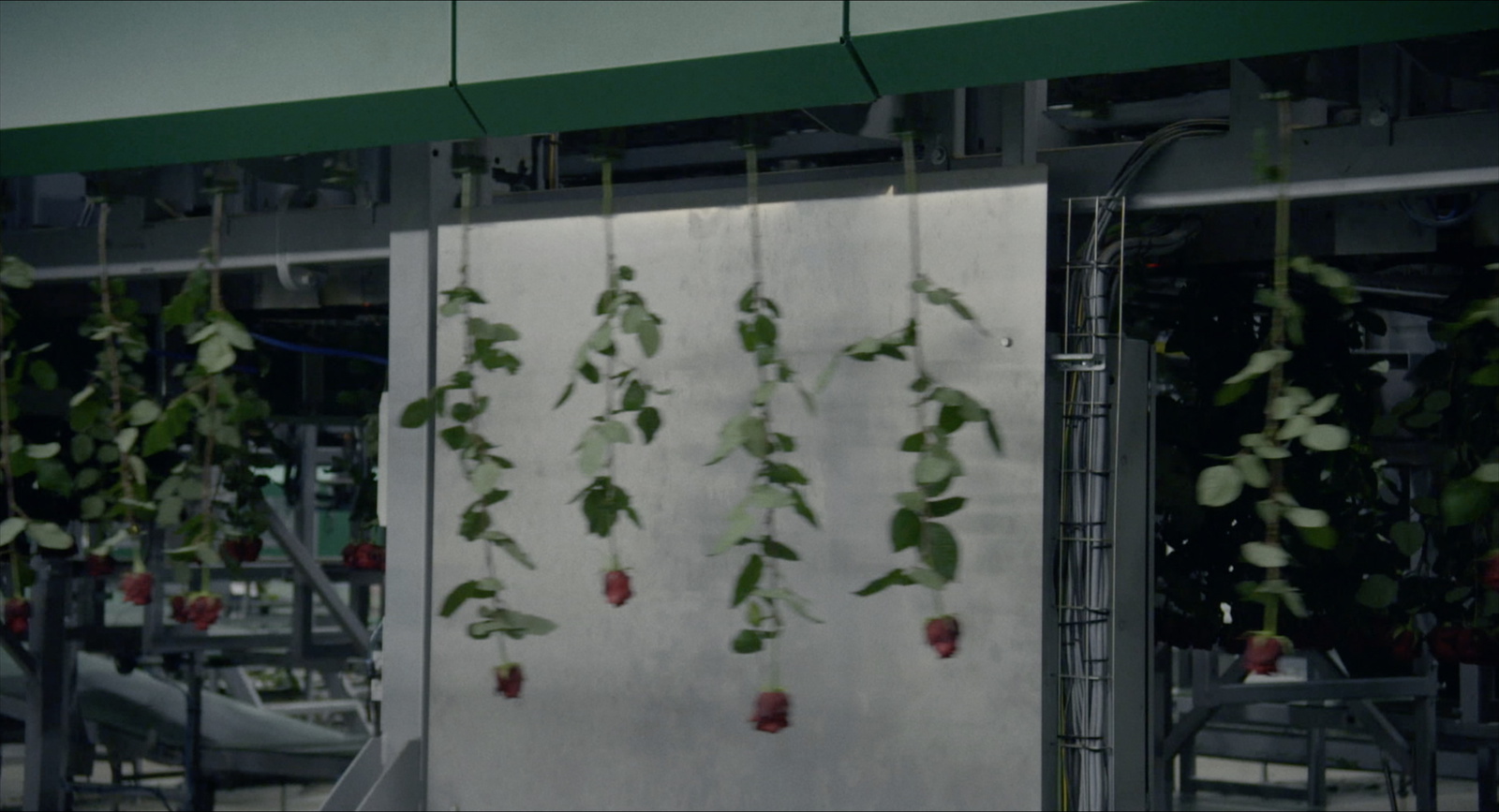
Éric Baudelaire, When Night Falls, 2026, film still. Courtesy the artist.
In 1976, Roland Barthes delivered his first lecture series at the Collège de France. Through a reading of five literary texts representing different social topoi and their associated ways of life, Barthes explores his notion of “idiorrhythmy,” a form of sociality that mediates the dialectic between each individual’s personal rhythm and the structure of the group. Envisioning a monastic community gathering to brave the night, Barthes notes: “To be strangers to one another is inevitable, even necessary and desirable—except when night falls.”
With When Night Falls (2026), French artist Éric Baudelaire returns to Barthes’ concern. Taking nightfall as a metaphor for an intensified condition of alienation, Baudelaire’s film weaves together seven seemingly disparate sites into a testament to both the splendor and cruelty of social life: Europe’s largest flower farm in Soria, a trading school in La Défense, the National Laboratory of Metrology and Testing, a UNESCO general assembly, a sculpture storage facility in Ivry-sur-Seine, a polling station in Normandy, and the National Institute for Blind Youth in Paris. At a time when one war after another floods our screens, the metaphor of nightfall points not just to the nightmarish conditions of the present. It also reiterates a familiar yet increasingly pressing question: What forms of the social can still be envisioned, experienced, and desired?
Expanding on the themes of Baudelaire’s film, the public program turns to the notion of infrastructure as a conceptual lens and political tool. If by infrastructure we mean the material conditions that enable and maintain social relations in a particular shape over time, what does it mean to bring these conditions and their contingency to light? Taking up Marina Vishmidt’s proposition of an infrastructural critique that treats these conditions as “amenable to re-arrangement through struggle and different forms of inhabitation and dispersal,” the public program presents four positions of thought that attend to the infrastructural through two intertwined questions: How do infrastructures operationalize forms of dispossession and neglect, and how can they be resignified and repurposed for other ends?
With contributions by Erika Balsom, Éric Baudelaire, Aria Dean, Jan Kunkel, and Isabel Millar
Curated by Jakob Grüner and Nan Xi
Supported by Stiftung Kunstfonds.
Éric Baudelaire & Erika Balsom
On the occasion of the exhibition opening of When Night Falls, artist Éric Baudelaire will be in conversation with London-based film scholar and critic Erika Balsom on 13 June 2026 at 3 pm, in the Chapel of Kaiser Wilhelm Memorial Church.
The two have been in an ongoing conversation over many years. Their thinking first crossed paths in Balsom's 2017 essay "The Reality-Based Community," which took Baudelaire's film Also Known as Jihadi (2017) as an example to reassert the political stakes of observational documentary and its relation to the real. Taking the five-channel video installation When Night Falls (2026) as a starting point, the conversation returns to these questions at a moment when AI-generated imagery has given them renewed urgency—asking, as Balsom once wrote, what it would mean to "affirm the facticity of reality with care, and thereby temper the epistemological anxieties of today in lieu of reproducing them," and, how a film might take up "a reparative relation to an embattled real."
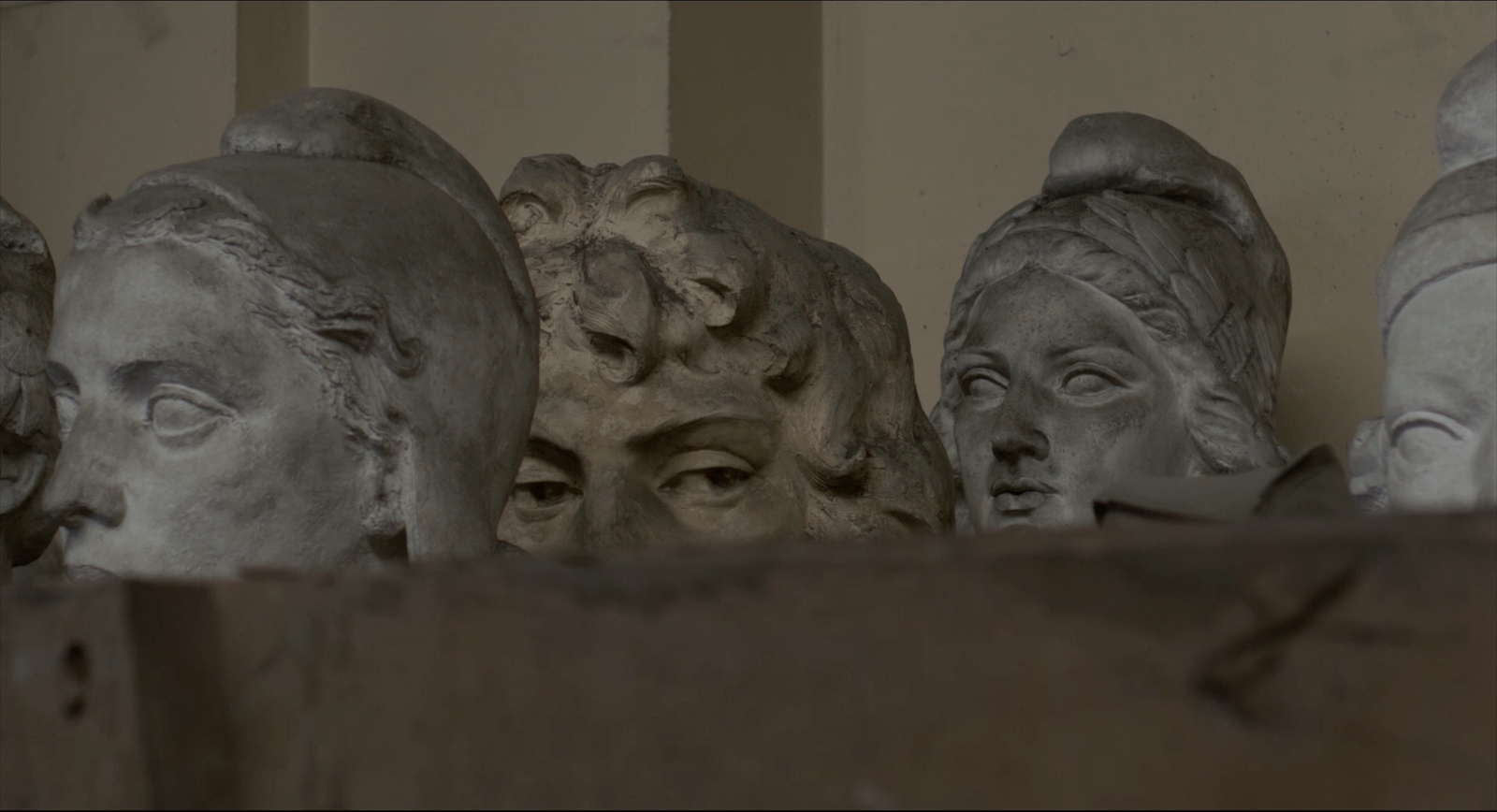
Éric Baudelaire, When Night Falls, 2026, film still. Courtesy the artist.
Erika Balsom is a reader in Film and Media Studies at King’s College London and the author of five books, including After Uniqueness: A History of Film and Video Art in Circulation (2017) and The Edges of Cinema: Essays on 21st Century Film Culture (2026), a collection of ten years of criticism that will be published later this year by Columbia University Press. Her writing has appeared in publications including Camera Obscura, e-flux, Film Comment, New Left Review. Her curatorial practice extends across the cinema and the gallery and includes the survey exhibition “No Master Territories: Feminist Worldmaking and the Moving Image”, which began at Haus der Kulturen der Welt, Berlin, in 2022 and has since toured internationally. She is currently a fellow in residence at the British School at Rome.
Éric Baudelaire is an artist and filmmaker based in Paris, France. Trained as a political scientist, he developed a research-based artistic practice that spans photography, moving image, installation, and performance. His feature films have been presented at major film festivals such as the Berlinale, Locarno, and the New York Film Festival, and within exhibitions where they appear as part of larger installations combining other works, archival materials, and extensive public programmes. In recent years, his work has been exhibited at the Centre Pompidou, MMK Frankfurt, Kunsthalle St. Gallen, Museo Reina Sofía, Bergen Kunsthall, Kunstinstituut Melly, Fridericianum, Beirut Art Center, and Gasworks, as well as in the São Paulo Biennial, Whitney Biennial, Sharjah Biennial, Taipei Biennial, and currently in the Venice Biennale.
Aria Dean
Killing Time
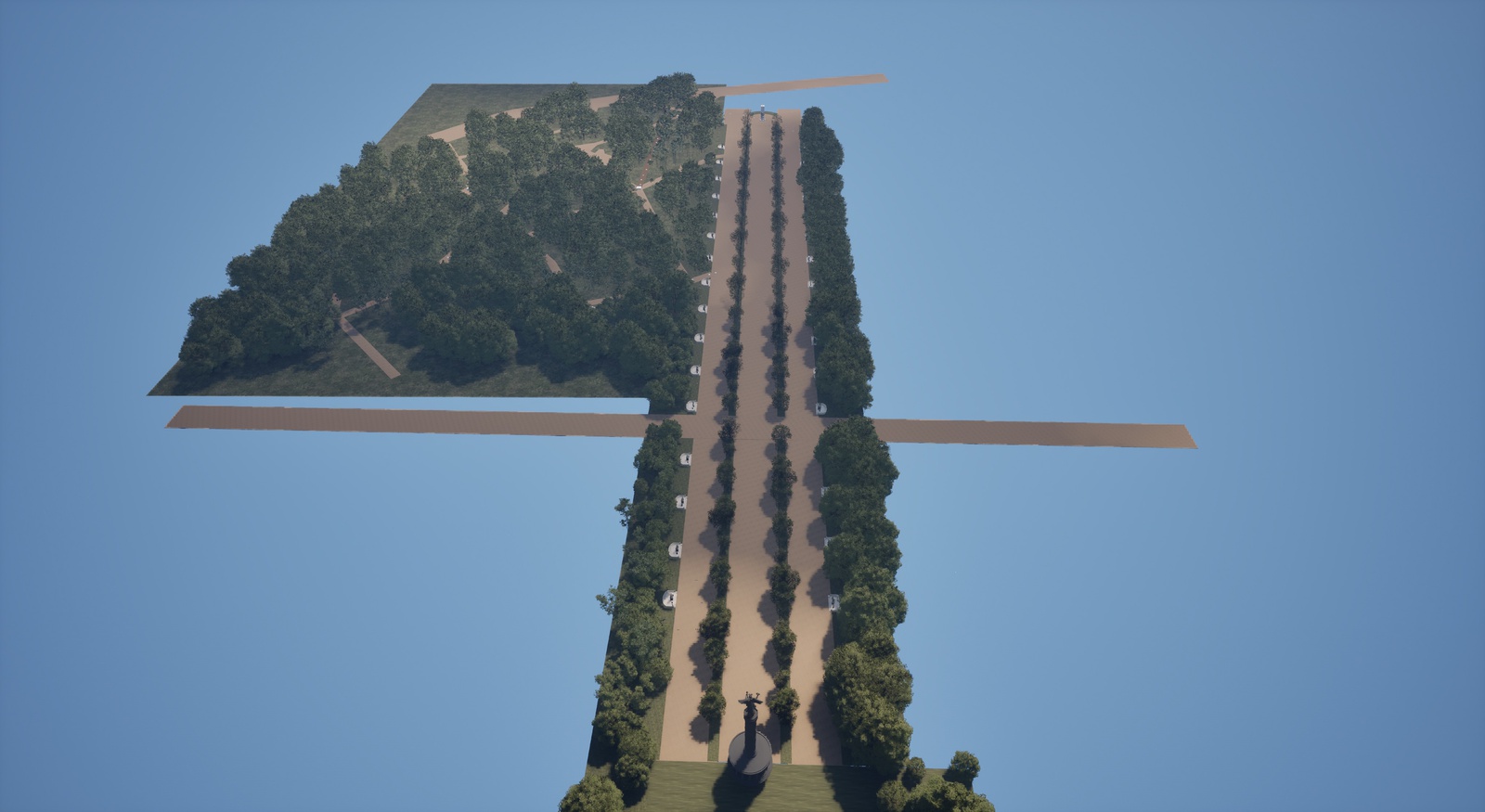
Temps mort, or "dead time," has long named a particular disposition in cinema: an attention to non-event and duration that opens a distinct relationship between image and reality. In her lecture, Aria Dean sketches out another manifestation of temps mort, which refers not only to the use of real time and non-action, but to the overall endeavor of presenting cinema produced from within real-time simulation. An increasing number of artists and filmmakers employ game engines, 3D modelling, and real-time simulation tools toward non-fantastical images that attend to the histories of both cinematic realism and experimental materialist cinema. Approaching the temporality of these images brings into focus the relationship between subject and world within them that in turn gives shape to what might be called a cinema of “unrealism.”
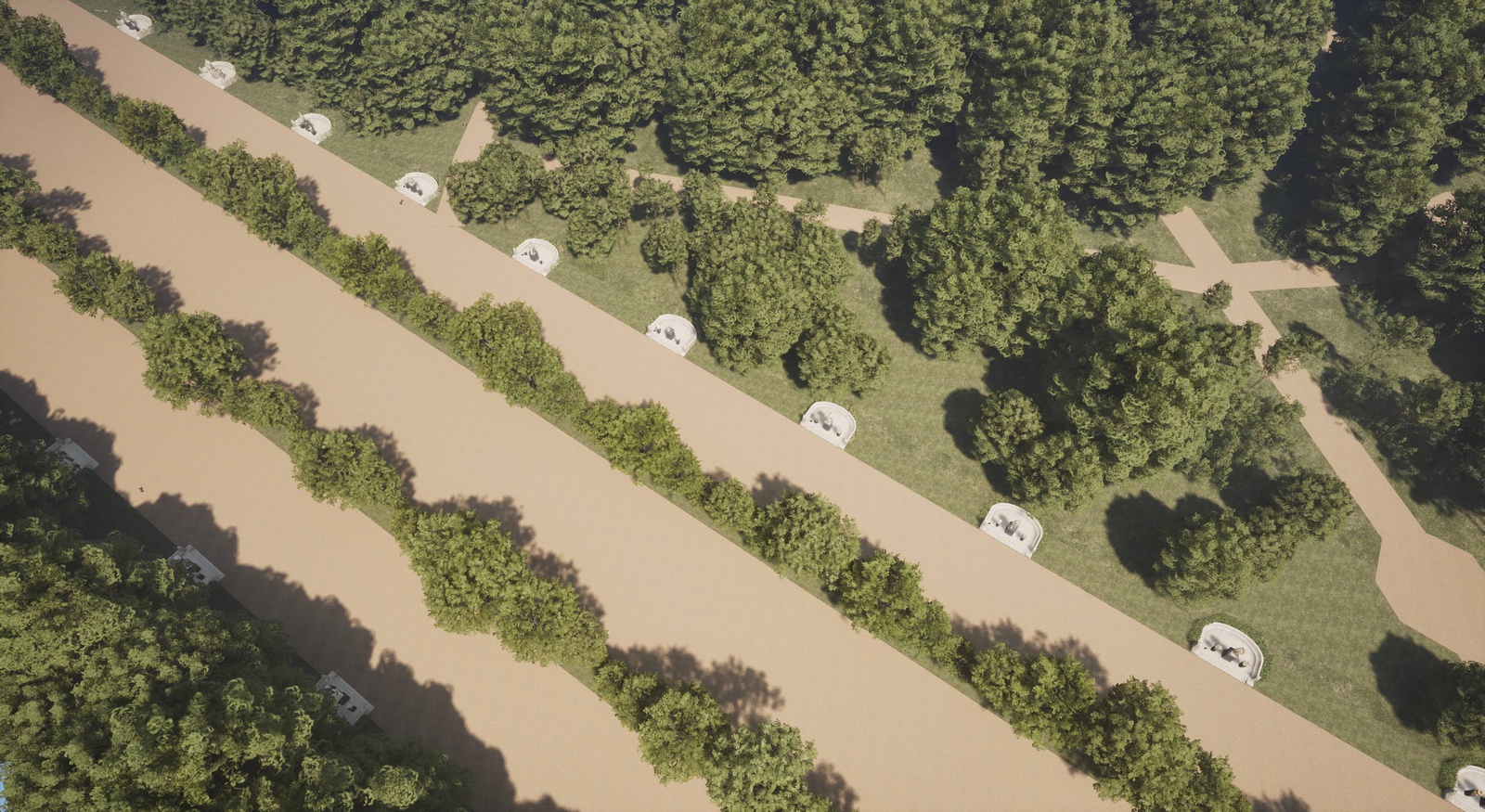
Filip Kostic, Working images from The Color Scheme set design, 2025. Digital animation stills. Courtesy Aria Dean and Filip Kostic.
Aria Dean is an artist, writer, and filmmaker based in New York City. She has exhibited widely in the US and internationally, with recent exhibitions including Facts Worth Knowing at Chateau Shatto, Los Angeles (2024); Aria Dean: Abattoir at Institute of Contemporary Art, London (2024); Figuer Sucia at Greene Naftali, New York (2023); Abattoir, U.S.A! at the Renaissance Society, Chicago (2023); and Quiet as It’s Kept: Whitney Biennial 2022 at the Whitney Museum of American Art, New York (2022), among others. Her first book of collected writing is Bad Infinity: Selected Writings (Sternberg Press 2023). Most recently, her play The Color Scheme (2025) commissioned by Hartwig Art Foundation and Performa, has had its European premiere at HKW, Berlin.
Isabel Millar
Idiorrhythmy: A Psychoanalysis of Orbits
In 1976 Roland Barthes delivers his lecture series "How to Live Together" for the Collège de France. He examines, via various literary examples, different communal structures and the means by which the individual maintains their freedom, independence and idiosyncratic existence: an idiorrhythmy of everyday life. The apartment block, the sanatorium, the confinement cell, the desert island, and the ascetic community become sites for exploring the boundaries between self and other. Using novelistic fragments, Barthes allows us to glimpse how distinct fantasies of domestic and communal life underpin our visions of political subjectivity.
Taking up this challenge today in an era of both peak alienation and over-proximity, we may explore how various strange social bonds are forged. Modes of individuation and modes of community building are attempted via the most extreme methods, by turns sadistic and masochistic. Relations to the other, the body and the law are framed via differing forms of abjection and absorption. What they all have in common is the orbit around a certain sexual non-rapport: a regime that we could call “patipolitical”—a politics of suffering. How has this libidinal infrastructure been built and how can we formulate an ethics in its wake?

Isabel Millar. Photo: Stephen Benedicto
Isabel Millar is a philosopher and psychoanalytic theorist from London. She is the author of the critically acclaimed The Psychoanalysis of Artificial Intelligence (Palgrave 2021) and Patipolitics, forthcoming with Bloomsbury. Her work appears internationally across media and academic forums and has been translated into multiple languages. She is Professor of Philosophy and Psychoanalysis at The Global Centre for Advanced Studies.
Jan Kunkel
Avowal
Avowal moves through a chain of substitutions across “worlds”—finance, art, administration. Here, the dialectic of dis-/avowal no longer describes opposites, but procedures. The sculptural and cinematic array opens onto a phantom structure that appears to be disproved by transgression: by crossing the very boundaries it claims to police. Yet such a fantasmatic presence persists through the forms meant to verify it, including inquiry, compliance, documentation.
The performers approach the incident already marked by mechanical, self-perpetuating chatter about “our tolerant society.” The work unfolds like an instituted gothic, evoking a tacit surrealism in which empty speech substitutes for political judgment and mindlessness for thinking. Once an investigation begins, much like due diligence in the global audit industry, it develops a logic of its own, only quasi-independent of those conducting it. Uncertainty does not undo what happened. Nor does the absence of a consciously held principle absolve anyone of its consequences.
Part transferential constellation, part war room, Avowal revives the antagonism of subject and structure, of pathology and reason. Its silences open a lacuna that the audience must enter: into the apparatus and the unredeemable.

Jan Kunkel, New Lombard Street / A Letter, 2026, film still. Courtesy the artist.
Avowal is a performance commissioned by CCA Berlin, created by Jan Kunkel with Alie O., Amel Baccouche, Christian Eisenberg, Gordon Douglas, Linda O. Elsner, Rosalie Michaelis, Vera Karlsson, Vivienne Sun.
Jan Kunkel is an artist whose work focuses on the relay between language, objects, and their dissimulation.